
Experiencing a Byzantine Liturgy
the church space
The space of Eastern Christian orientation is characterized by the attempt to reveal the fundamental experience: God as both Creator and Father is with us.
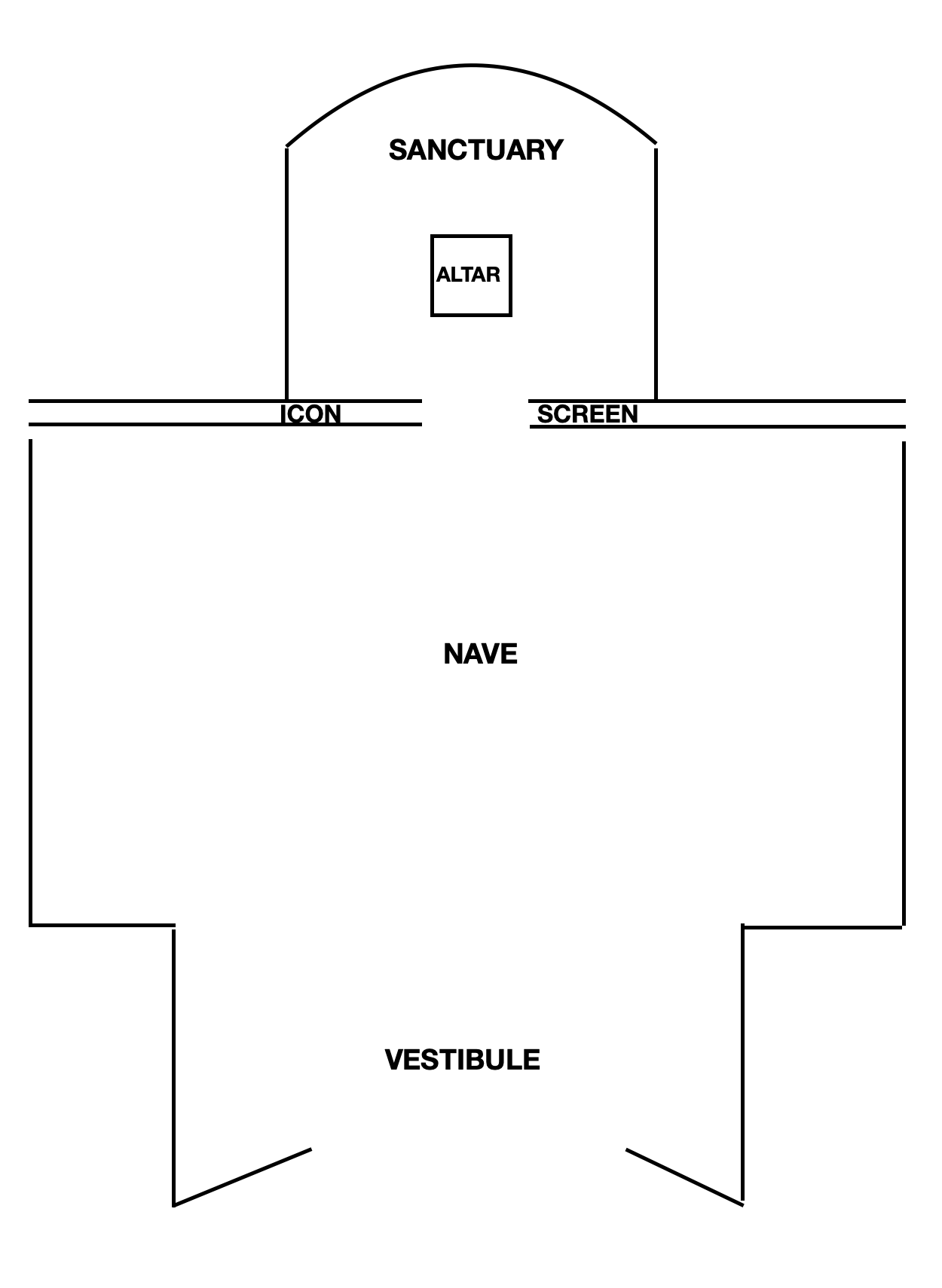
There is a desired church architecture which cannot always be accommodated due to building restraints. Even in rented or shared spaces, the Eastern worship space is divided into three sections modeled after the ancient Israelite temple described in the Old Testament and in the Book of Revelation. The temple was more than a building. It was where heaven and earth met and where the earth experiences “Thy kingdom come.”
In the sanctuary, the center altar is Jesus the enthroned Christ as both Word and Lamb of God. Through God the Father and empowered by the Holy Spirit, all the heavenly hosts, both angels and saints, facilitate the glorification of God in Christ.
The icon screen (iconostasis) may seem like a wall of separation or division, but it is more intended to draw a laser beam focus on the Word and Lamb of God and on the fullness of the God’s Kingdom. The icons are not shades to blind us from the great mystery but windows to let us see into it and mirrors to helps us see who we really are.
Before the sanctuary, christians gather in the nave as Christ’s church to join in the heavenly and eternal praise.
Finally, in the vestibule, all the world is beckoned toward the mystical event where Christ ““unites all things in himself, things in heaven and things on earth,” (Eph 1.10) and that in Him we are all be “filled with all the fullness of God” (Eph 3.19).”
Perhaps one could compare entering the Church space in a similar way as entering a huge stadium for a spectacular event. The vestibule is the gateway and corridor. We gather there first and process to the Nave. The Nave is where we assemble as both the heavenly and earthly Church, and the sanctuary is the event we are there to not only view, but to participate in.
Participation
byzantine, orthodox, eastern,greek
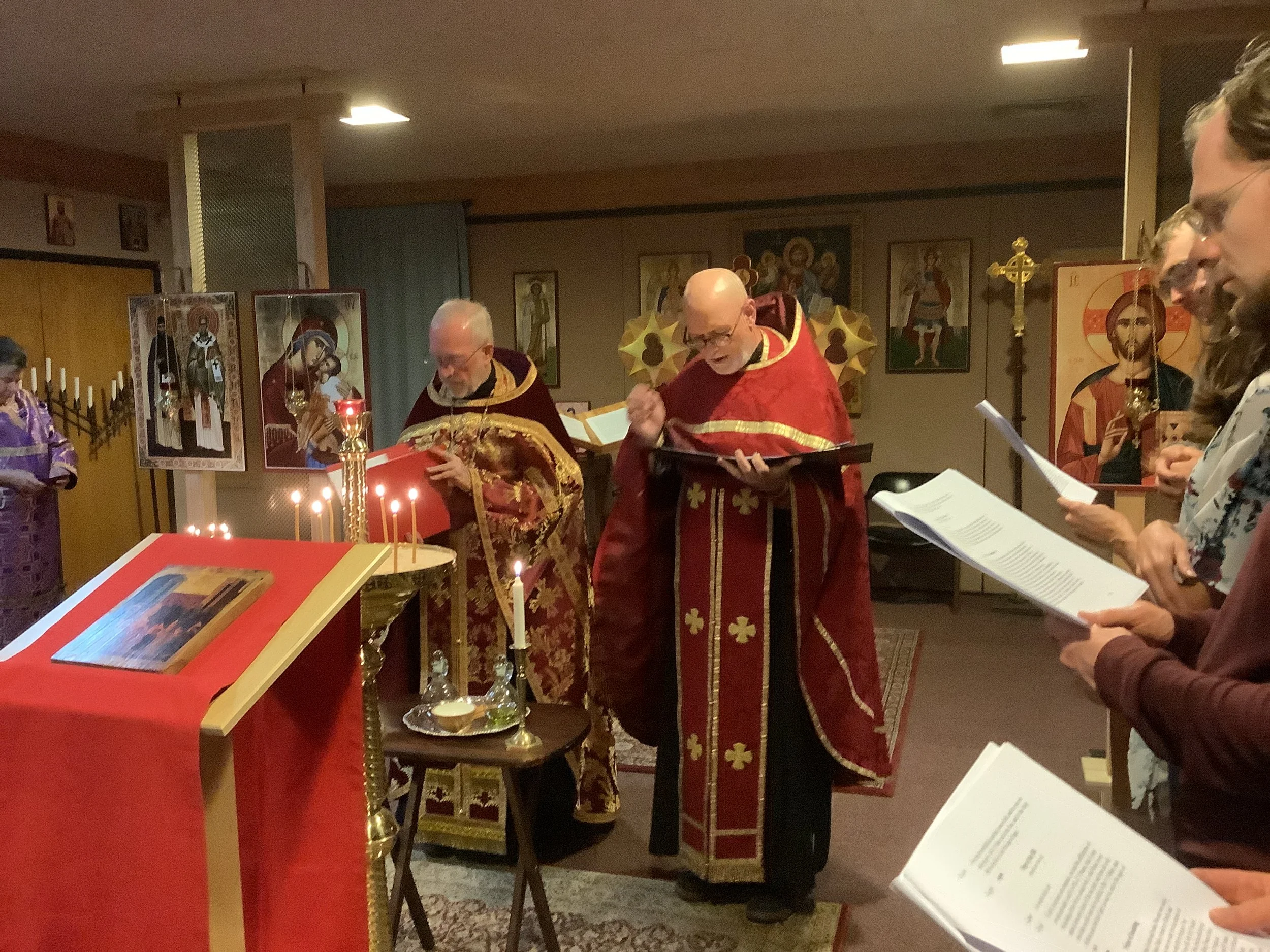
We are practicing a liturgical rite that historically emerged in the eastern part of the Christian Church.
Our particular rite is known as the Byzantine Rite because its mother church is “Byzantium”, more commonly known as Constantinople (today it is called Istanbul). This is the Rite used by nearly all Eastern Orthodox churches. It can also be designated as the Greek liturgy because of its origin and early development in the Greek language. In a similar way, the Western liturgy can also be designated as the Latin rite and the Anglican rite because its primary language is English.
encounter not a show
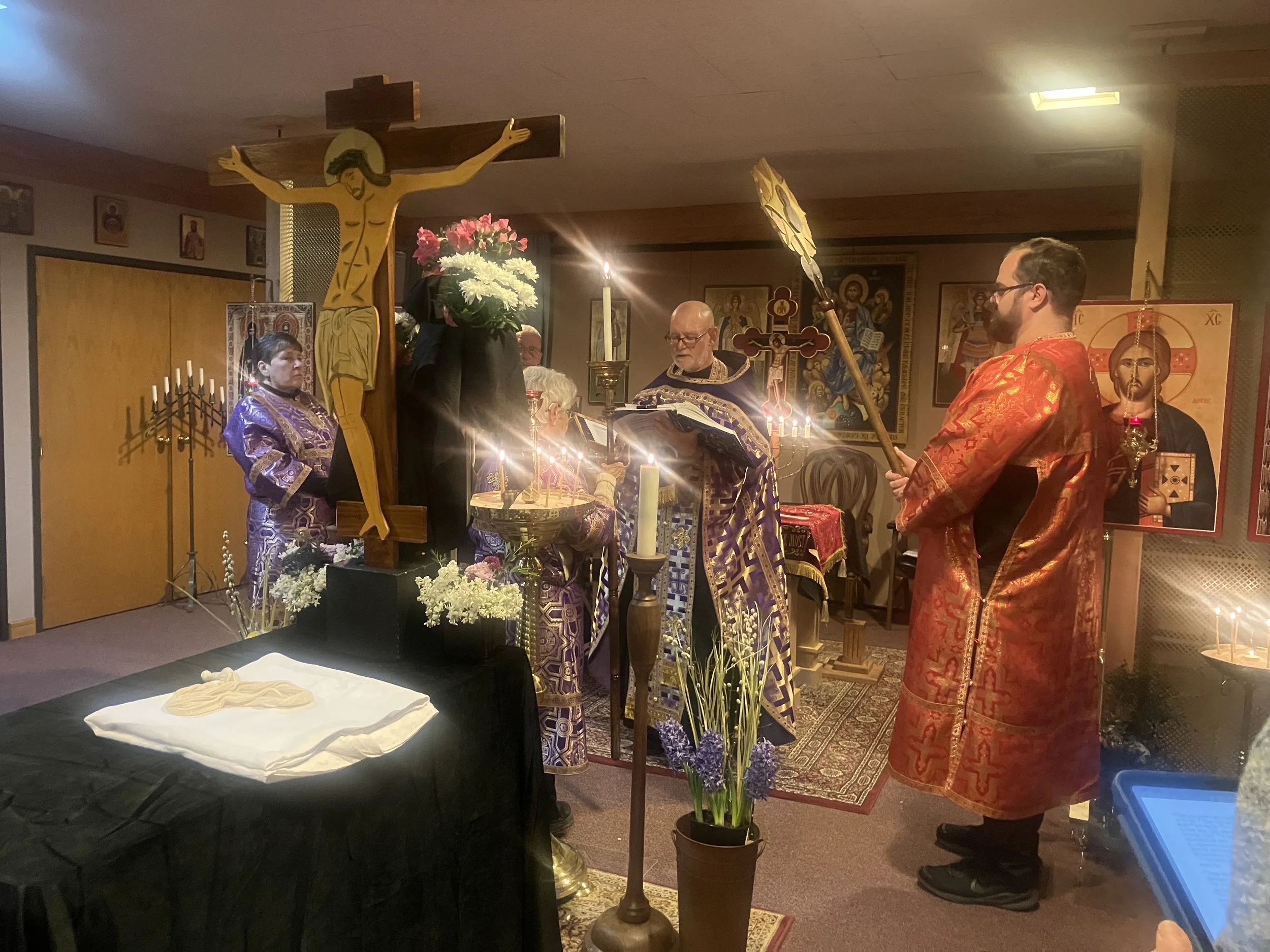
In many ways, the Byzantine rite can seem like going to the theatre. There is an elaborate stage with special effects (bells, candles, music, icons, and incense) and people dressed up in colorful, antiquated costumes.
There is a big difference, however. In a theatre, you take a seat and watch the performance. In Orthodox worship you are beckoned to participate in an encounter with the mystery of the Holy Trinity with all of your senses.
Within the worship or prayer service, some practices are common to most Eastern Christians which Western Christians are not familiar with.
With our eyes, we behold the beauty of Christ in his theological image (icon) and of all the saints who surround the church as a “great cloud of witnesses.” Special reverence is also preserved for Mary the mother of Jesus because in her total surrender to the will of God, she became the God-bearer (Theotokos).
With our voices, we chant the prayers of the church in adoration and speak words of affection, encouragement, and wisdom to each other.
With our ears, we listen to hymns glorifying God and to the Good News of Jesus.
With our nose, we smell the fragrance of incense invoking the presence the Holy Spirit.
With our legs, we stand in referential deference to the resurrection. [Standing for a whole service is challenging. It is encouraged, but no required.] We also walk in procession.
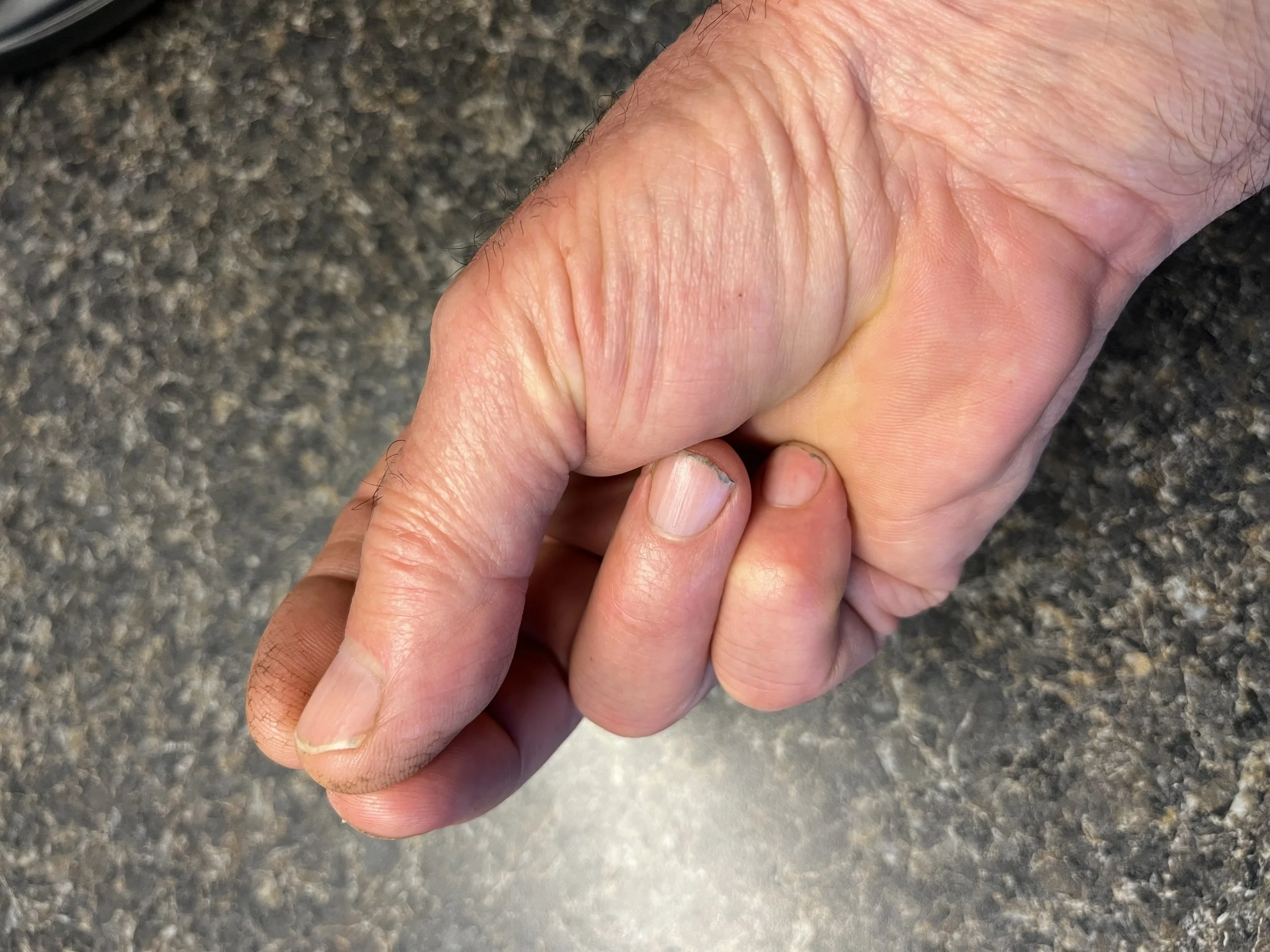
With our hands and arms, we make the sign of the cross whenever the Holy Trinity is named. [Some traditions encourage one to position the hand with the thumb and first two fingers held together (reminding of the unity of the Trinity) and the two small fingers folded toward the palm of the hand (reminding of the divine and human natures united in Jesus).
With head and body, we bow and occasionally prostrate ourselves in profound reverence.
With our lips, we reverently kiss icons, the chalice, the priest’s or bishop’s hand, the gospel and each other. [The recent global pandemic has dampened the kissing practice considerably. We found bowing the head an acceptable substitute.]
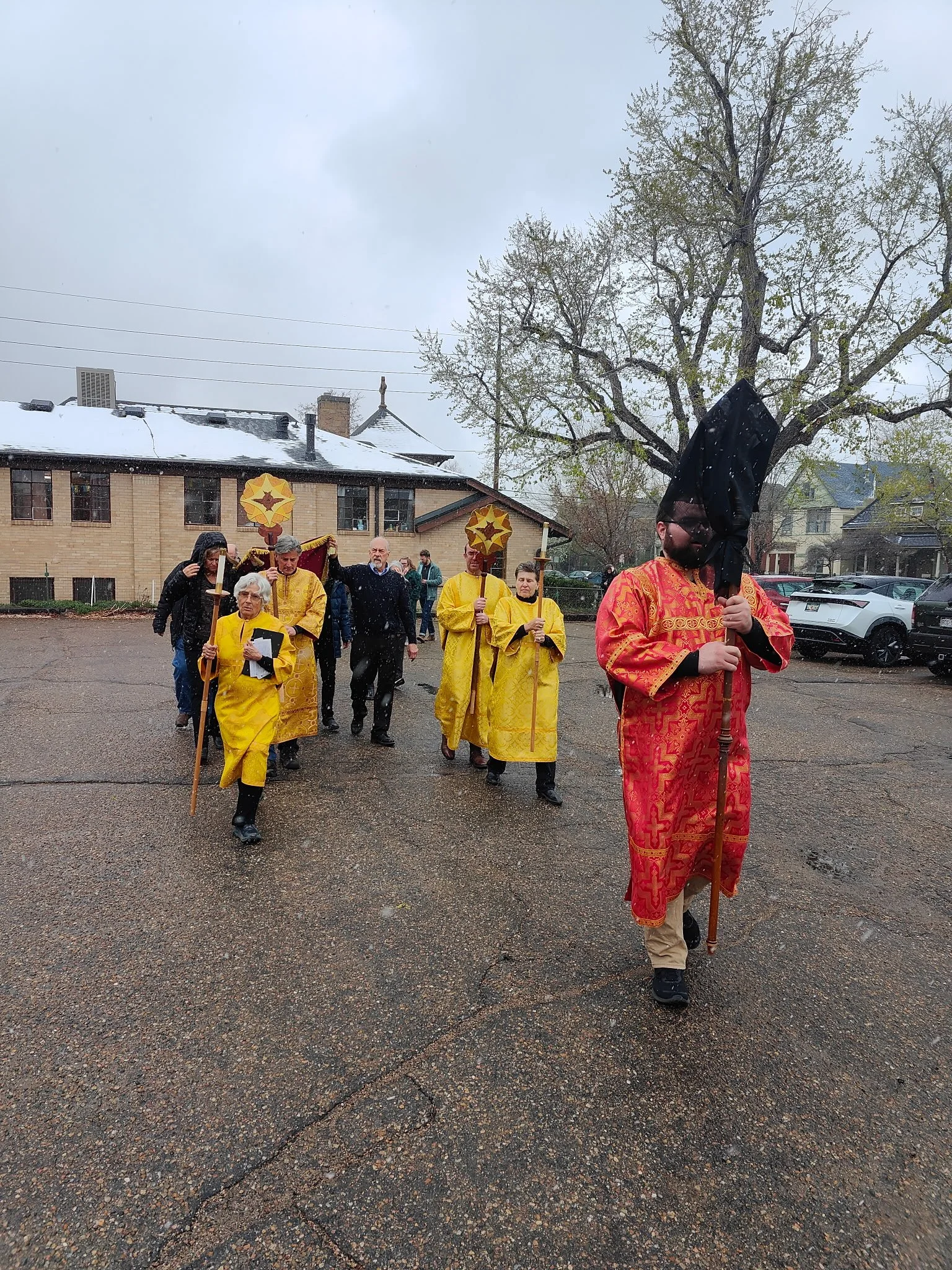
most of all — movement
Byzantine services view God as Holy Trinity in a constant interchange of communion and love. The movement and gestures present in the service reflects an active, loving, and giving God.
We are also to see ourselves as moving towards the never-ending end.
When you first enter the building, you will find everyone standing around. The service begins with the people gathering in the vestibule. We will sing the “antiphons” just as the ancient Israelites and the early Christians did on their way to the temple/church.
Then the priest will announce: “Blessed is the entrance of your holy people, now and ever and to the ages of ages!” The people sing “Come Let Us Worship” as they process into the nave. At communion, the people draw close to the altar.
be attracted, not distracted
Admittedly, the participatory aspect can be uncomfortable for those not familiar with it or reticent towards involvement. We encourage worshippers to engage to the level one is able and willing. Participate to the level that it draws you nearer to the mystery rather than distracting your from it. Don’t worry about whether you are “doing things right” or that you are lost. The “right” thing is that you are here. Absorb.